F1 Race Replay
Keep the field in view, follow the story
What could an alternative radio for Formula 1 be?
- MY ROLE
- Concept, replay system, physical-display interaction and AI chapter workflow
- CONTEXT
- Independent exploration of data, attention and ambient objects
- STATUS
- Working local prototype
From input to experience.
THE INTERACTION LOOP- 01
Choose
Browse the catalog and select an available race.
- 02
Prepare
Race data becomes a ledger of events and grounded chapters.
- 03
Watch
The field moves together on the dedicated display.
- 04
Notice
Chapters and supported focus views surface meaningful changes.
A race you can tune into
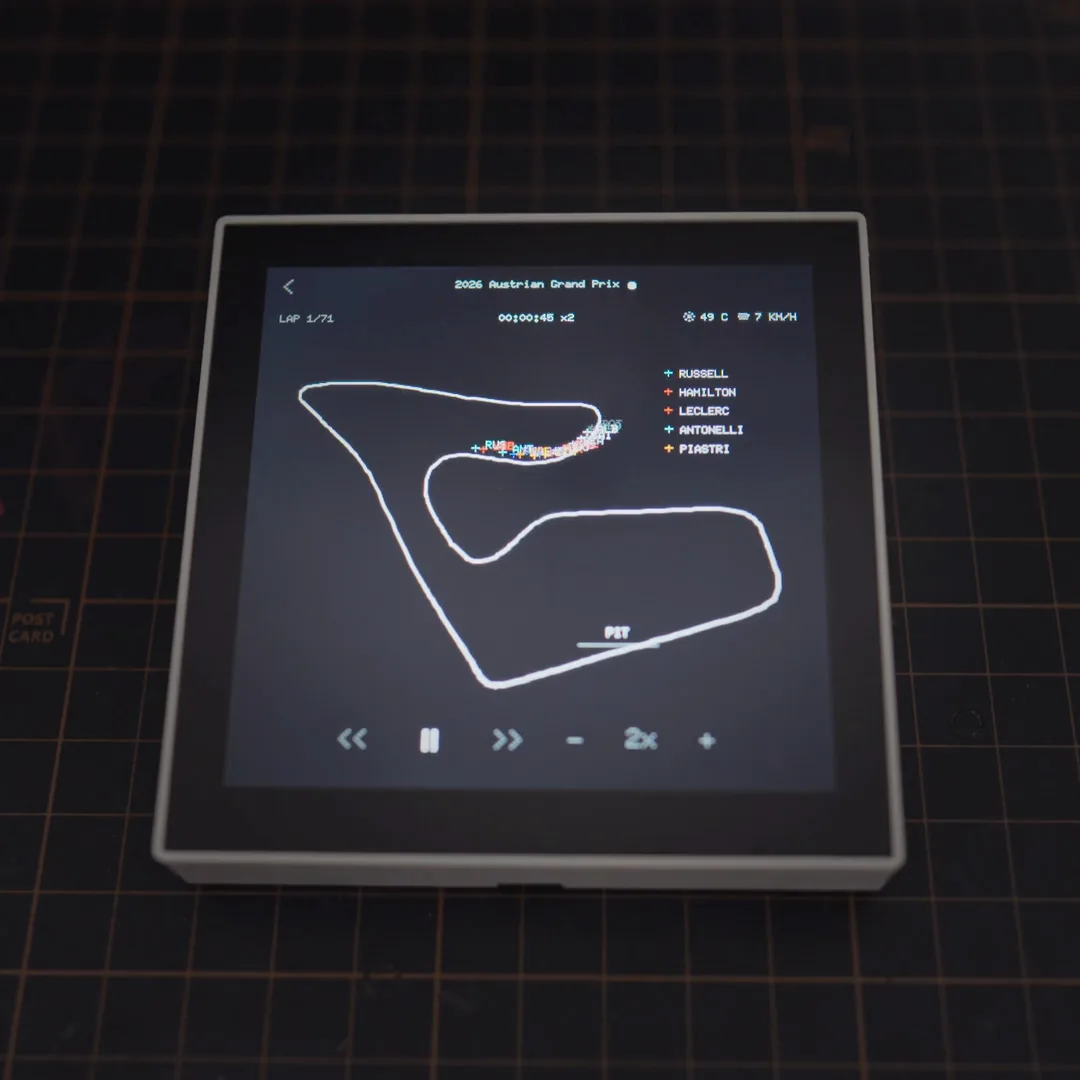
I conceived and built an object that stays with the race. Its square display keeps every driver moving on the circuit while a live order and color-coded markers make groups, gaps and converging battles visible.
Radio describes the relationship: something you can leave running and return your attention to when the shape of the race changes. Short documentary chapters give those moments context.
An editor grounded in events
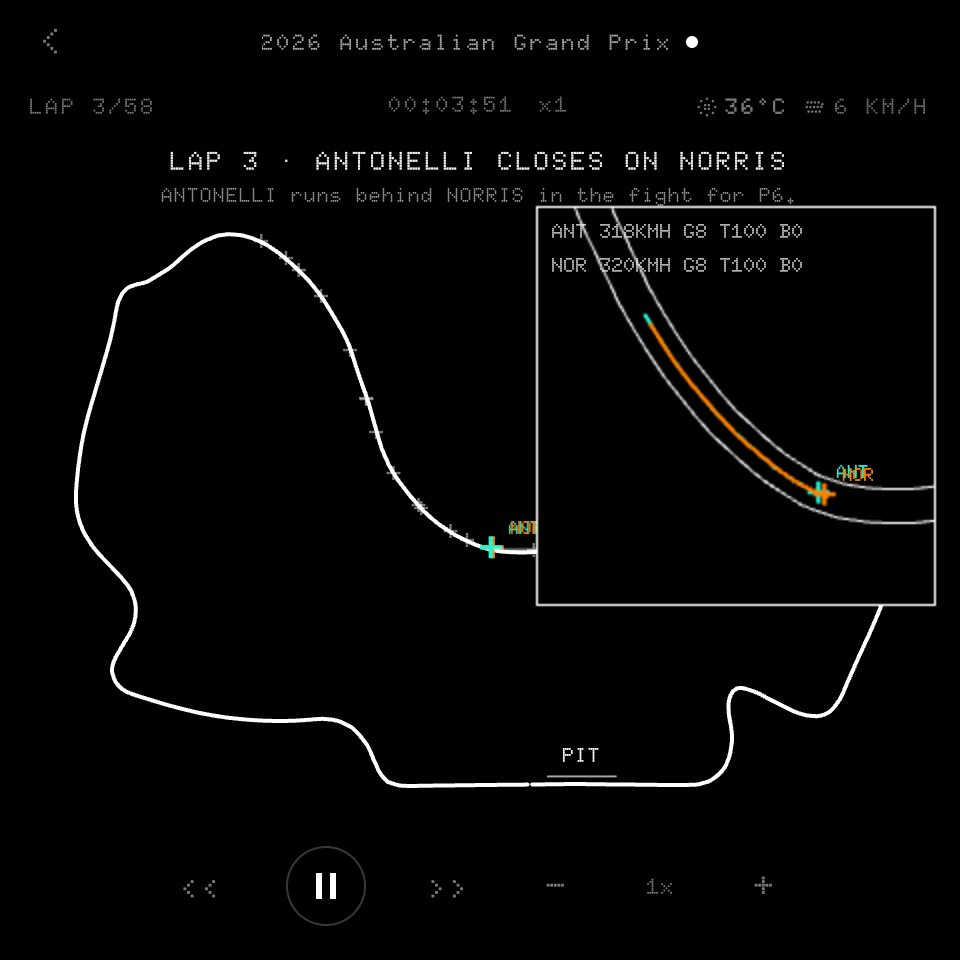
A deterministic event ledger detects race developments such as starts, battles, confirmed passes, pit cycles and retirements. A local model selects the event IDs that create a useful narrative rhythm.
The model cannot invent telemetry or add unsupported facts. Chapters and their reasons are stored before replay; once prepared, playback is deterministic and makes no live model calls. When supporting signals agree, an overtake inset can focus on the relevant trajectories.
Let the missing data stay visible
The historical loop follows James Hunt and Niki Lauda at Zandvoort in 1975. Without modern telemetry for that race, it advances through documented milestones, selected laps, sourced gaps and documentary captions.
It does not fabricate speed, trajectories or timing to fill the gaps. A browsable catalog of seasons, Grands Prix and available sessions lets the same object move between races.
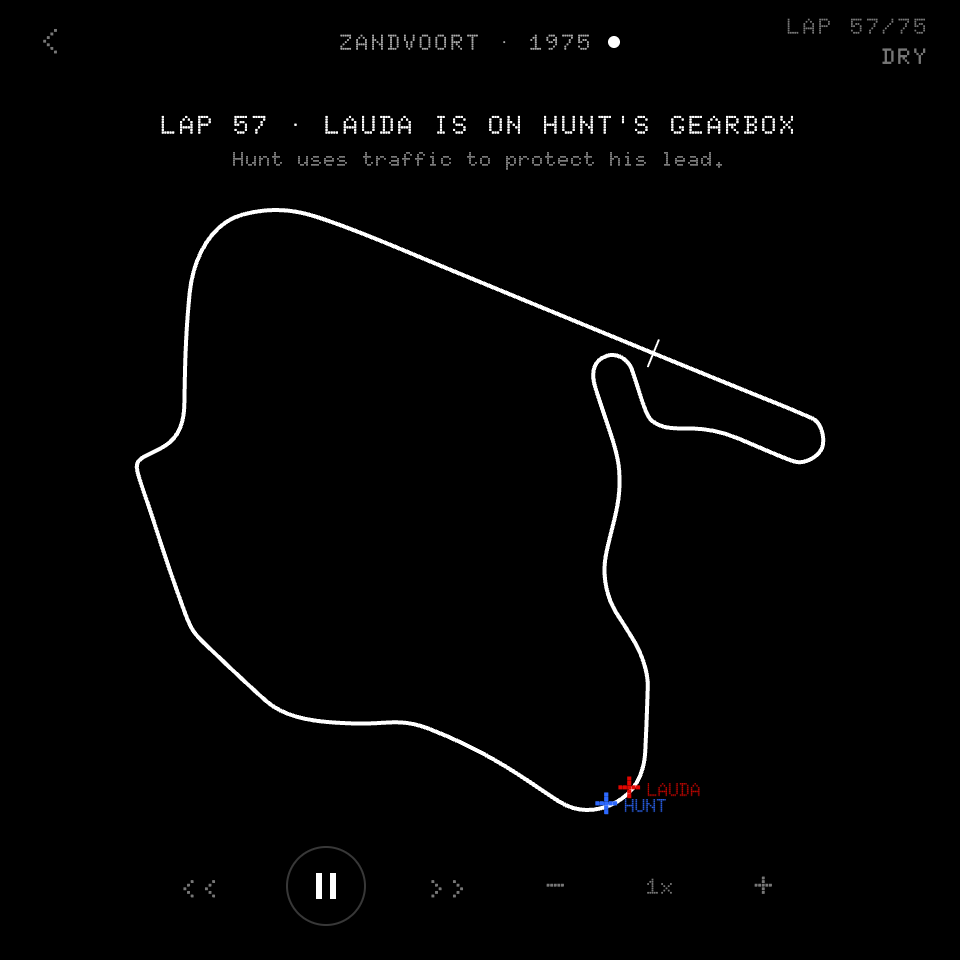
The display makes room for the whole field, while the data determines when the story comes forward.